What Are Payday Loan Regulations?
Payday loan regulations are state-level laws that dictate how payday lenders can operate. These laws cover the maximum loan amount, the fees and interest a lender can charge, the length of the loan term, and whether rollovers (renewing a loan by paying only the fees) are allowed. They are designed to protect borrowers from predatory lending practices while still allowing access to short-term credit where permitted.
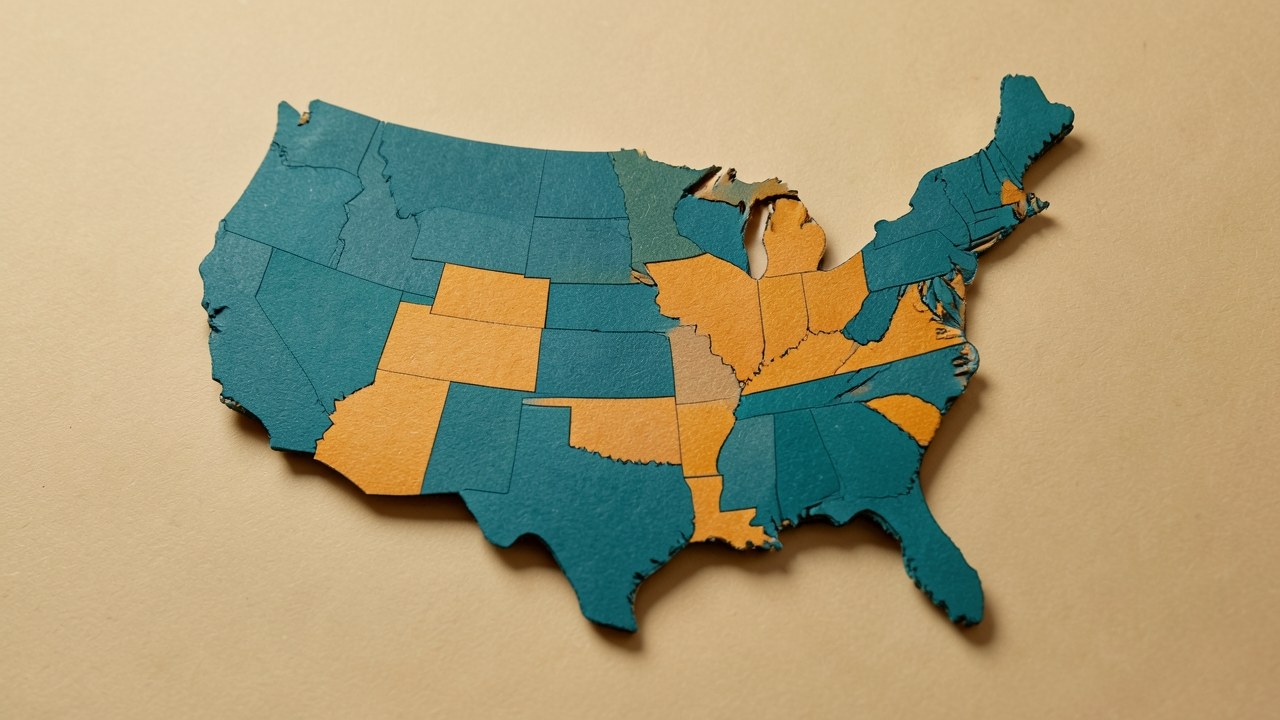
The federal government sets a baseline for consumer financial protection, but payday lending is primarily regulated at the state level. Each state can choose to adopt its own rules—some states have specific payday loan statutes, others apply general usury caps, and a few allow no payday lending at all. This patchwork of laws means the legality and cost of a payday loan can vary significantly depending on where you live.
Sources: National Conference of State Legislatures, University of Notre Dame Department of Economics
Federal vs. State Regulatory Landscape
At the federal level, the Consumer Financial Protection Bureau (CFPB) oversees payday lenders and accepts complaints from consumers who believe a lender has violated federal consumer financial laws. However, the CFPB does not set interest rate caps or loan terms; these are determined by individual states.
States have the primary authority to license and regulate payday lenders. They can enact statutes specifically governing payday loans, impose interest rate caps through usury laws, or choose to prohibit the practice altogether. Understanding the interaction between federal oversight and state law is crucial: even if a lender is located in another state or operates online, it must comply with the laws of the borrower's state.
- The CFPB is a federal agency that accepts complaints about payday lenders.
- Online lenders must follow the law in the borrower's state, not the lender's state.
Sources: Nolo, The Credit People, First Security Bank
State Rate Caps and Fee Limits
States that allow payday lending set specific limits on fees and interest rates. These rate caps are the primary way states control the cost of payday loans. Some states are more restrictive, while others allow lenders to charge rates that can exceed 400% APR.
State regulations can generally be divided into several types, including price caps, loan term limits, and loan size caps. Most states with explicit payday lending statutes cap the fee at a certain dollar amount per $100 borrowed. For example, some states limit the fee to $15 per $100 lent. Other states apply a flat annual percentage rate (APR) cap, such as a 36% APR limit.
- Most minimum payday loan terms are 7 to 14 days; most maximums are 30 to 60 days.
- State loan size caps generally range from $300 to $1,000.
| State | Rate Cap | Loan Term | Additional Limits |
|---|---|---|---|
| Colorado | 36% APR | Minimum 6 months | None stated |
| South Dakota | 36% APR | Not specified | None stated |
| Montana | 36% APR | Not specified | None stated |
| Nebraska | 36% APR | Not specified | None stated |
| Illinois | 36% APR | Not specified | None stated |
| Texas | No cap | Not specified | None stated |
| Nevada | No cap | Not specified | None stated |
| Utah | No cap | Not specified | None stated |
Sources: University of Notre Dame Department of Economics, First Security Bank
States Where Payday Lending is Prohibited or Unavailable
In eleven jurisdictions, payday lending is effectively unavailable either because there is no specific statutory provision allowing it or because lenders must comply with interest rate caps that make payday loans unviable. These jurisdictions include Connecticut, Guam, Maryland, Massachusetts, New Jersey, New York, Pennsylvania, Puerto Rico, Vermont, the Virgin Islands, and West Virginia.
Some states have explicitly let their payday lending statutes sunset, such as Arizona and North Carolina. Others have repealed their statutes, including Arkansas in 2011, New Mexico in 2017, and the District of Columbia in 2007. In these states, payday loans are not available because the legal framework no longer exists.
It is important to note that some states without explicit payday statutes may still allow other types of short-term lending, but they are not regulated as payday loans and must comply with general usury limits. If you live in a state where payday lending is prohibited, you cannot legally get a payday loan, even from an online lender, because online lenders must follow the borrower's state law.
Sources: National Conference of State Legislatures, The Credit People
State-by-State Table: Loan Limits, Interest Caps, and Rollover Bans
The table below summarizes available data on state-level payday loan parameters, including loan size caps, interest caps, and rollover provisions. The data is drawn from the cited sources and is not exhaustive; for complete and current information, consult the National Conference of State Legislatures summary or your state's regulatory agency.
| State | Loan Size Cap | Interest Cap | Rollover Ban | Notes |
|---|---|---|---|---|
| Colorado | $1,000 | 36% APR | Not specified | Minimum loan term of 6 months. |
| Florida | $500 traditional; $1,000 installment | 10% fee + $5 verification | Yes | Maximum term 31 days; one loan at a time; 24-hour wait between loans. |
| Illinois | Not specified | 36% APR | Not specified | Under Predatory Loan Prevention Act. |
| Montana | Not specified | 36% APR | Not specified | None |
| Nebraska | Not specified | 36% APR | Not specified | None |
| Nevada | Not specified | No cap | Not specified | APRs often exceed 400%. |
| South Dakota | Not specified | 36% APR | Not specified | None |
| Texas | Not specified | No cap | Not specified | APRs often exceed 400%. |
| Utah | Not specified | No cap | Not specified | APRs often exceed 400%. |
Sources: First Security Bank, Nolo, Florida Office of Financial Regulation
Example: Florida's Payday Loan Rules
Florida is an example of a state with explicit payday lending regulations. The Florida Office of Financial Regulation oversees payday lenders. Florida law limits payday loan fees to 10% of the loan amount plus a $5 verification fee, and the maximum loan amount is $500 for traditional payday loans (or $1,000 for installment loans).
Florida also has strict rules about how loans can be issued. A borrower may only have one outstanding payday loan at a time, tracked through a statewide database. The loan term cannot be less than 7 days or exceed 31 days. Rollovers are prohibited, meaning a borrower cannot simply pay the fee to extend the loan. After paying off a loan, a borrower must wait 24 hours before taking out another one.
If a borrower is unable to repay the loan at the end of the term, the lender must provide a 60-day grace period with no additional charge, provided the borrower completes credit counseling. These consumer protections help illustrate how detailed and varied state rules can be.
- Loan term: 7 to 31 days.
- Rollovers are prohibited.
- One loan at a time.
- 60-day grace period after credit counseling if unable to pay.
Sources: Nolo, Florida Office of Financial Regulation
How to Check Your State's Rules
Because state payday loan regulations are complex and can change, you should always verify the current rules in your state with official sources. The National Conference of State Legislatures (NCSL) provides a summary of state payday lending statutes, which is a good starting point. However, the NCSL page may not include every detail, so you should also check your state's regulatory agency website.
Before taking out a payday loan, research your state's laws to know the maximum loan amount, the fee structure, and any restrictions on rollovers or loan terms. This knowledge can help you avoid lenders who operate outside the law.
- Check your state's regulatory agency website.
- Review the NCSL summary for a national overview.
Where to File Complaints if a Lender Violates Regulations
If you believe a payday lender has violated state or federal regulations, you can file a complaint with your state's regulatory agency. For example, the Florida Office of Financial Regulation oversees payday lenders in that state and handles consumer complaints. To find the correct agency in your state, search for your state's banking or financial regulation department.
You can also file a complaint with the Consumer Financial Protection Bureau (CFPB), a federal agency that accepts complaints about payday lenders. The CFPB can help with issues related to federal consumer financial laws and can intervene if a lender engages in unfair, deceptive, or abusive practices.
- State regulatory agency: e.g., Florida Office of Financial Regulation.
- Federal agency: Consumer Financial Protection Bureau (CFPB).
Sources: Nolo, Florida Office of Financial Regulation
Recent Legislative Trends
Recent years have seen a trend toward stricter regulation of payday loans. Some states have moved to adopt 36% APR caps, which effectively make traditional payday loans unprofitable for lenders. For example, Colorado, South Dakota, Montana, Nebraska, and Illinois have all passed 36% APR caps, though some allow installment loans with longer terms.
Other states have chosen to let payday loan laws expire or have repealed them entirely. Arizona and North Carolina allowed their statutes to sunset, while Arkansas, New Mexico, and the District of Columbia repealed their regulations. These actions reflect a growing concern about the high cost of payday loans and their impact on consumers.
Legislative changes can happen frequently, so it's important to stay informed about your state's current laws. The CFPB also plays a role in federal oversight, but state legislatures are the main drivers of payday loan regulation changes.
Sources: National Conference of State Legislatures, First Security Bank
Frequently asked questions
What is the typical APR cap in states that allow payday loans?
There is no single typical APR cap. States with specific payday lending statutes often cap the fee per $100 borrowed, such as $15 per $100, rather than calculating an APR. Some states, however, impose a 36% APR cap, including Colorado, South Dakota, Montana, Nebraska, and Illinois. Other states like Texas, Nevada, and Utah have no price cap at all, allowing APRs that can exceed 400%.
Sources: University of Notre Dame Department of Economics, First Security BankHow do state laws affect online payday lenders?
Online payday lenders must comply with the laws of the borrower's state, not the state where the lender is located. This means that even if you apply for an online loan from a lender based in a state with lenient rules, the loan must still meet the regulations of your home state. If payday loans are banned in your state, an online lender cannot legally offer you one.
Sources: First Security Bank, The Credit PeopleWhat is the maximum APR allowed for payday loans in most states?
There is no uniform maximum APR across the states, as each state sets its own rules. A few states have no cap at all. Since state laws vary widely, you should check the specific regulations in your state.
Sources: University of Notre Dame Department of Economics, First Security BankCan a lender operate online if payday loans are banned in my state?
No, if payday loans are prohibited in your state, an online lender cannot legally offer you a payday loan because online lenders must follow the borrower's state law. Even if the lender is located in a state where payday loans are allowed, they are not permitted to lend to residents of states where payday lending is banned or where caps make such loans unprofitable.
Sources: First Security Bank, The Credit PeopleHow does the CFPB regulate payday lending?
The CFPB is a federal agency that oversees payday lenders and enforces federal consumer financial laws. It does not set state-level interest rate caps, but it does accept complaints from consumers about payday lenders and can take action against lenders that violate federal regulations. For example, if a lender engages in unfair, deceptive, or abusive practices, the CFPB can pursue enforcement.
Sources: NoloAre there any proposed federal rules that could affect payday lending?
The most significant regulatory actions have occurred at the state level, such as the adoption of 36% APR caps in several states. Federal oversight via the CFPB exists, but any future federal rule changes would be announced by the agency.
Sources: Nolo, First Security BankSources
- Summary Payday Lending State Statutes — National Conference of State Legislatures
- Assessing the Effects of State Payday Lending Regulation on ... — University of Notre Dame Department of Economics
- First Security Bank - State-by-State Payday Loan Limits and Regulations 2024 — First Security Bank
- Florida Payday Loan Laws: Rules, Limits & Your Rights — Nolo
- Are Payday Loans Legal In Your State? — The Credit People
- Payday Lenders (Deferred Presentment Providers) — Florida Office of Financial Regulation